Ingrown Toenail Infection: The Warning Signs
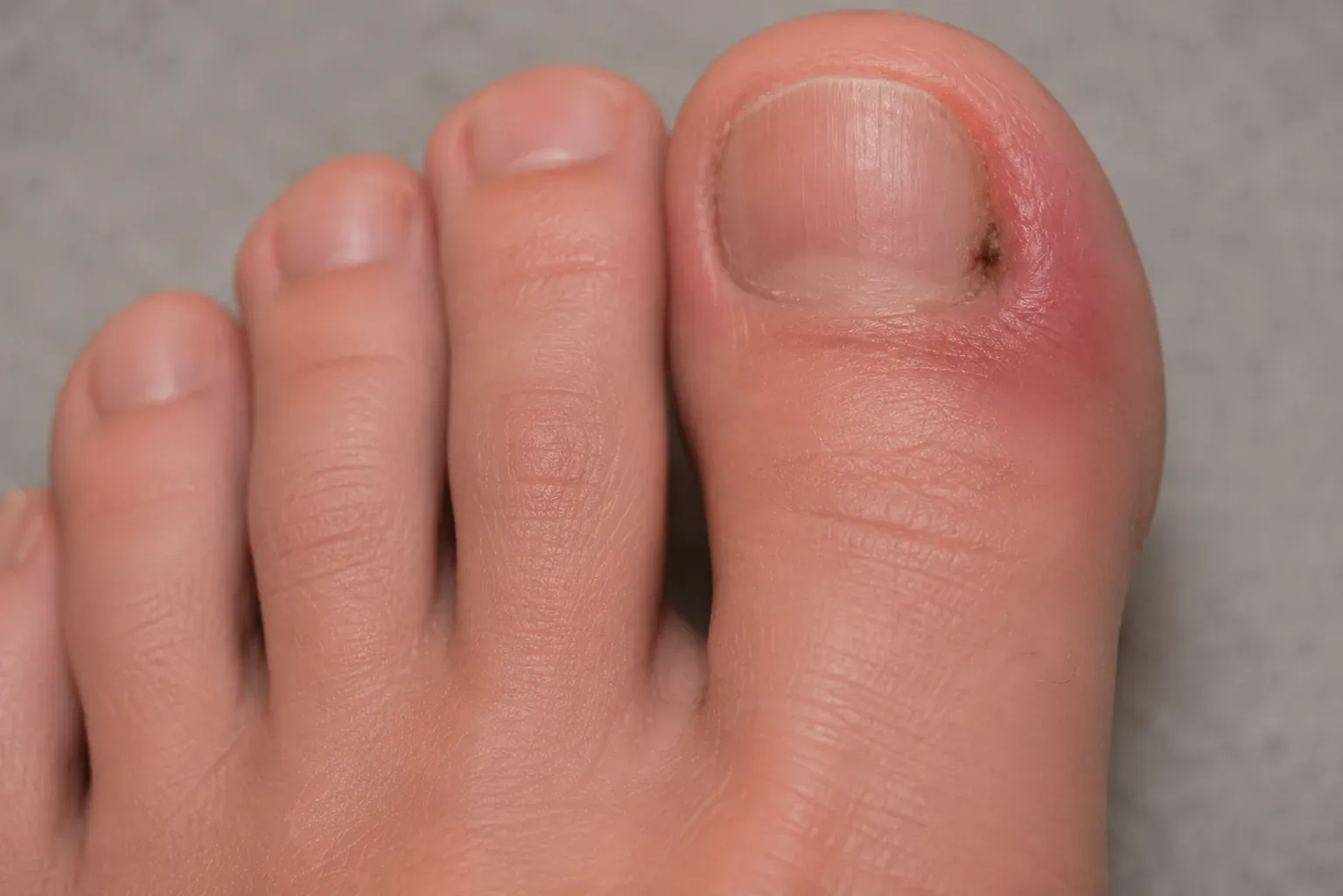
Every ingrown toenail is angry; not every one is infected. Here's the line, and what crossing it means.
Read the article →An ingrown toenail can turn work boots, dress shoes, even bedsheets into instruments of torture. The fix is as outsized as the misery: one short office visit usually ends the pain the same day, and a nail that keeps ingrowing can be corrected so it never does it again.
The trouble starts when the edge of a nail, almost always on the big toe, grows into the skin fold beside it. Your body responds the way it would to any foreign object: the fold swells, reddens, and often becomes infected, and every step in a closed shoe presses the edge in deeper. A single episode may trace back to one bad trim or a stubbed toe. A toe that ingrows again and again has a shape problem; the nail's curvature will keep aiming its edge into the skin until that edge is permanently narrowed.
Spotting an ingrown nail takes a glance. The assessment that matters covers three questions: is there an infection to treat, is this a one-off or a pattern, and does the nail's curvature promise more episodes? The answers separate simple edge removal from a permanent correction, and Dr. Repitor walks you through that choice before anything happens.
A mild first episode gets a few days of warm soaks and roomier shoes. If the pain is climbing, the fold is draining, or this is a repeat performance, book the visit: the procedure is short and the relief is immediate. Skip the bathroom surgery entirely. And if you have diabetes, an ingrown nail is a call-today problem, never a wait-and-see one.
Call (586) 277-3476 promptly for: spreading redness or red streaking up the toe or foot; pus with fever; any ingrown nail if you have diabetes or poor circulation. Urgent foot problems are worked into the schedule faster.
Treatment starts with the simplest option likely to work and escalates only when needed.
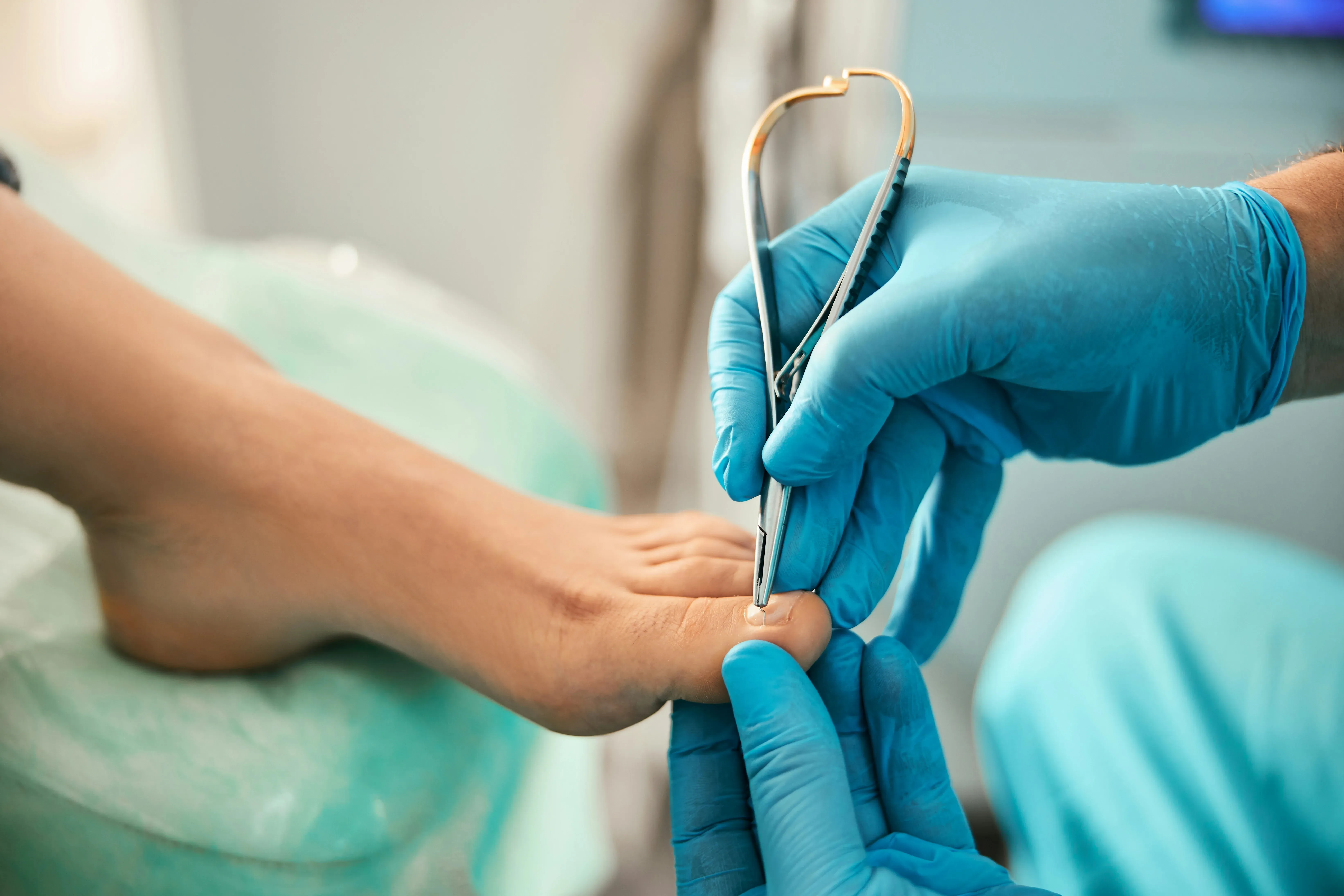
Once the toe is numbed, removing the offending nail edge takes a few minutes. The pressure pain is gone before you leave, and most patients are back in normal shoes, work boots included, within a day or two.
An infected fold is drained and treated with topical or oral antibiotics as needed, so the toe heals cleanly instead of smoldering.
A treatment of the narrow strip of nail root behind the problem edge stops that sliver from ever regrowing. The nail ends up a touch narrower, looks normal, and in the large majority of cases the ingrowing is over for good.
Trim straight across and leave the corners, choose footwear with room in the toe box, and manage moisture. Cheap habits that keep one bad episode from becoming a pattern.
Almost everyone does, most the same or next day. Desk work is immediate; jobs in safety-toe boots may call for a day or two in a roomier shoe while tenderness settles. A Saturday morning appointment means many working patients never miss a shift at all.
The nail edge keeps growing, so the direction is predictable: more pressure, more inflamed tissue heaping over the nail, and a rising chance of infection spreading beyond the toe. Ingrown nails don't self-correct, and the ones treated early are also the quickest and simplest to treat.
Home cutting removes the visible corner but tends to leave a spike deeper in the fold, and the nail root keeps producing the same curved shape. Each round of regrowth digs in again. Breaking that cycle at the root is exactly what the permanent matrixectomy procedure does.
It's an office procedure done under local numbing, not an operating-room surgery. You walk out afterward, keep the toe clean and covered for a couple of weeks while the fold heals, and normal activity resumes almost immediately.
Every ingrown toenail is angry; not every one is infected. Here's the line, and what crossing it means.
Read the article →Most ingrown toenails start with a trimming decision. The correct technique takes no extra time; it just takes knowing it.
Read the article →Four real options, very different success rates. An honest comparison before you spend another year on the wrong one.
Read the article →One visit at our Sterling Heights office gets you a diagnosis and a plan. Call (586) 277-3476 or book online.